
01
You keep explaining the same things.
Your priorities, past decisions and way of working deserve a useful home. Give AI relevant, maintained context to work from.
AI · Pandion Studio
For people running businesses, practices and estates. We help you build an AI operating system around your knowledge and day-to-day work, then work alongside you as it develops.
Start with one useful change. Build from what works.
The context that makes the work yours.
Tools and routines that fit real tasks.
Reviewed experience informing the next step.
Your judgement and control throughout.
A practical starting point
The best starting point is often a piece of everyday work that takes too much effort. These are examples of the questions we can explore together.
01
Your priorities, past decisions and way of working deserve a useful home. Give AI relevant, maintained context to work from.
02
Follow a real piece of work across its documents, systems and people. Find where better connections would make a difference.
03
Turn a recurring task into a clearer routine, with the right information, checks and handover points.
The bigger picture
Over time, useful improvements can become a connected way of working: maintained knowledge, repeatable routines, suitable tools and clear human responsibility.
That is what we mean by an AI operating system. It grows around the business you run, with the starting point as small as one workflow.
A website can be one starting point, connecting customer enquiries to the records and routines behind the business.
From website to business workspacePandion develops and uses this approach in its own practice, connecting working knowledge, planning and delivery. What we learn informs how we work alongside clients.
Nic brings business operations, AI and sustainability together in one working relationship. The support develops with the needs of the organisation.
About Nic and PandionWe work alongside you on real tasks, from understanding the problem to putting improvements into use. Agree the next piece of work, learn from it and keep developing what helps.
Start with your priorities and a real example. Look at the people, information and systems already involved.
Try a manageable improvement together. It might be better context, a repeatable workflow or a carefully chosen tool.
Look at usefulness, quality and time, including checking and corrections. Establish what improved for the person doing the work.
Keep what works, capture what you learn and choose the next improvement. Build the wider system at a pace you can sustain.
Practical questions
The right setup depends on your work, your information and the people who will use and maintain it.
We start with what you already use and where your records belong. An improvement may be possible within those systems. New tools or connections are considered where they serve an agreed need and can be supported.
Before using your information, we agree what can be used, where it may go and who can access it. The choices depend on the actual service, account and configuration. Hosted, local and hybrid options can be considered against those requirements.
That depends on the task and the consequences of getting it wrong. We define the boundaries, checks and decisions that stay with a person. More autonomy is an option to assess, not a requirement for progress.
Agree what a useful result would look like before making the change. Compare it with the current way of working, including ongoing costs and effort. Time released, better quality, lower risk and new capability are different benefits; each needs an appropriate check.
We consider whether AI is needed, whether a simpler approach would work, and the relevant effects on people and resources. Sustainability is part of choosing and using the system responsibly, as well as a field where it can help.
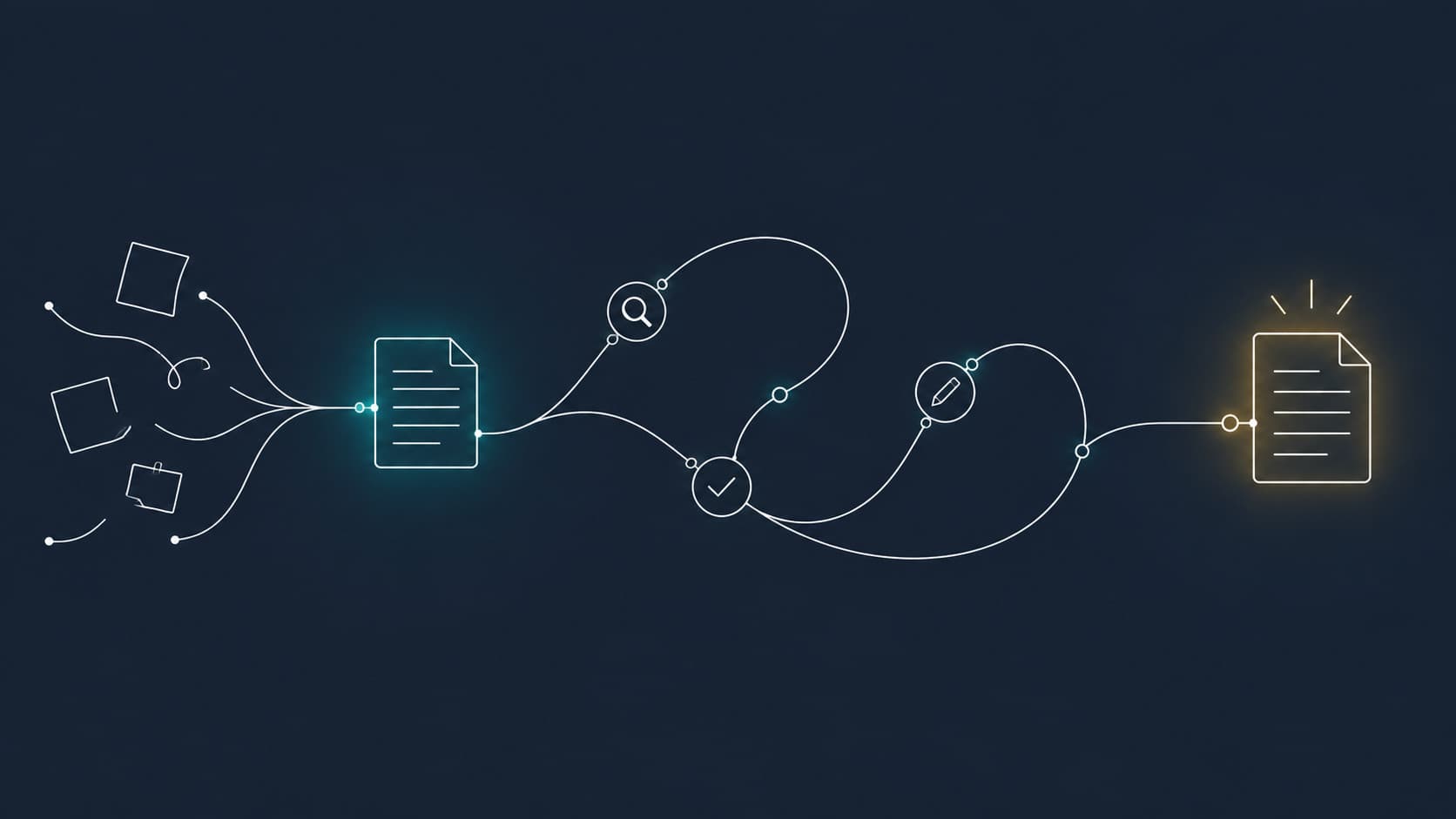
From AI Signal · Q3 2026
A fast draft is only part of the story. Our quarterly AI Signal looks at the effort between the first input and work you can actually use.
Read the article All AI Signal writingBring a challenge, a recurring task or a question about where AI might fit. We can explore a useful starting point.